

All About Alignment
how to be who you want to be this year


It’s 2026! Happy New Year folks, I hope you’ve had a peaceful start to the year and I wish you all the best for the months ahead. May your year be filled with good health, joyful memories, love and alignment.
Winter truly arrived in London towards the end of December. Concerningly mild weather has given way to the blank brightness of the season. Through my window, a chilly sky, so blue it blinds. The trees shiver, their branches naked and bear. I find deep contentment in the relationship between natural and human world, as nature invites us to shed, clear and conserve, readying ourselves for Spring, and we take her up on her offer.
I’ve been thinking about who I’m bringing into 2026. What did I learn about myself? Who did I discover I was becoming? What version of who I am cannot follow me into this year?
Questions like these are helpful, necessary even. We need to be able to reflect on our lives - the seeds of the futures we seek lie in identifying what has worked, what hasn’t and what we need to do to change. But, they aren’t sufficient. We can spend excessive amounts of time looking back on the coulda, shoulda, wouldas and not find anything change in our lives. We orient ourselves towards overcoming the version of ourself we wish to leave behind.
Our work then, I’ve realised, is about building a stronger relationship with the version of our selves we seek to be. This is the difference between alignment and overcoming. In the same way we feel strongly attached to identities like being an Eldest Daughter or the idea of an Inner Child, we need to cultivate an image of ourselves that feels vivid and real enough to anchor and align ourselves to.
The first thing to know is that this isn’t easy. The plasticity of our brains is dependent on effort. If left to it’s own devices, our brains will choose safety (i.e. what is comfortable and familiar, even if this isn’t actually good for us) over and over again. How many times have you tried to do something new that seems “simple” or “easy,” struggled, and then berated yourself for finding it hard? It’s not your fault, it’s part of our wiring. A huge part of this work then is about helping our brains and bodies feel safe in doing something new.
Safety is a feeling. Safety is familiarity. So how can we cultivate a sense of safety in newness?
Change is a feeling
Popularised by James Clear on his blog and in his book Atomic Habits, is the idea of identity based habits.
Your current behaviours are simply a reflection of your current identity. What you do now is a mirror image of the type of person you believe that you are (either consciously or subconsciously).
To change your behaviour for good, you need to start believing new things about yourself. You need to build identity-based habits.
I love this idea and think there’s a lot of value in it. James Clear even encourages starting small - his one minute rule is to start on tiny, foundational habits that we can commit to and build from. But, the body’s experience (i.e. feeling) is missing. For example, say you don’t read and you want to be a reader. You start with a new habit of reading one page a day. But if you already hold beliefs that you don’t have/deserve time for leisure, finding a book to read, sitting down and actually reading that one page may be totally rejected by your body (hence your prior and continued avoidance).
What we need is to get familiar with the feeling of being a new version of ourselves. What does it feel like to be a reader? Imagine you finish all those books you’ve been eyeing up. What does it feel like to look at the stack of completed books? Pride, satisfaction, accomplishment? Imagine you meet someone who’s read a book you loved. Feel the excitement pulse through your body, the smile on your face.
Imagination is our greatest tool in our own becoming. If we are able to direct our attention and train our imagination, just as any muscle, it will grow stronger and become easier to imagine good possibilities over time. When we start, we will be met, once again, with the limitations of our own wiring - our brains scan for danger, imagine the worst possible scenarios, create obstacles to keep us secure. But this is only a false sense of security. Just as the brain scans for costs of action, we need to correct its attempts to feel and imagine the costs of inaction. The eroding sense of self-trust and self-confidence as you keep going back on promises to yourself. The feeling that you’re living a less rich life than you know is possible.
Change and imagination are hard because we are working against history and evidence. We will never be able to undo all we have/haven’t done, but what is here, ready and waiting for us, is the present where new thoughts, actions and a way of being are available to us. Know and remember that the smallest of changes can have the most magnificent effects. You don’t need to hustle hard, become someone totally new or set unrealistic expectations. The truth, I’m sure, is that you can point to evidence in your life, a seed, that is all ready, waiting for your nurture and attention towards becoming who you want to be. Who you already are, somewhere deep within. Water it. Love it. Your future self will thank you for it.
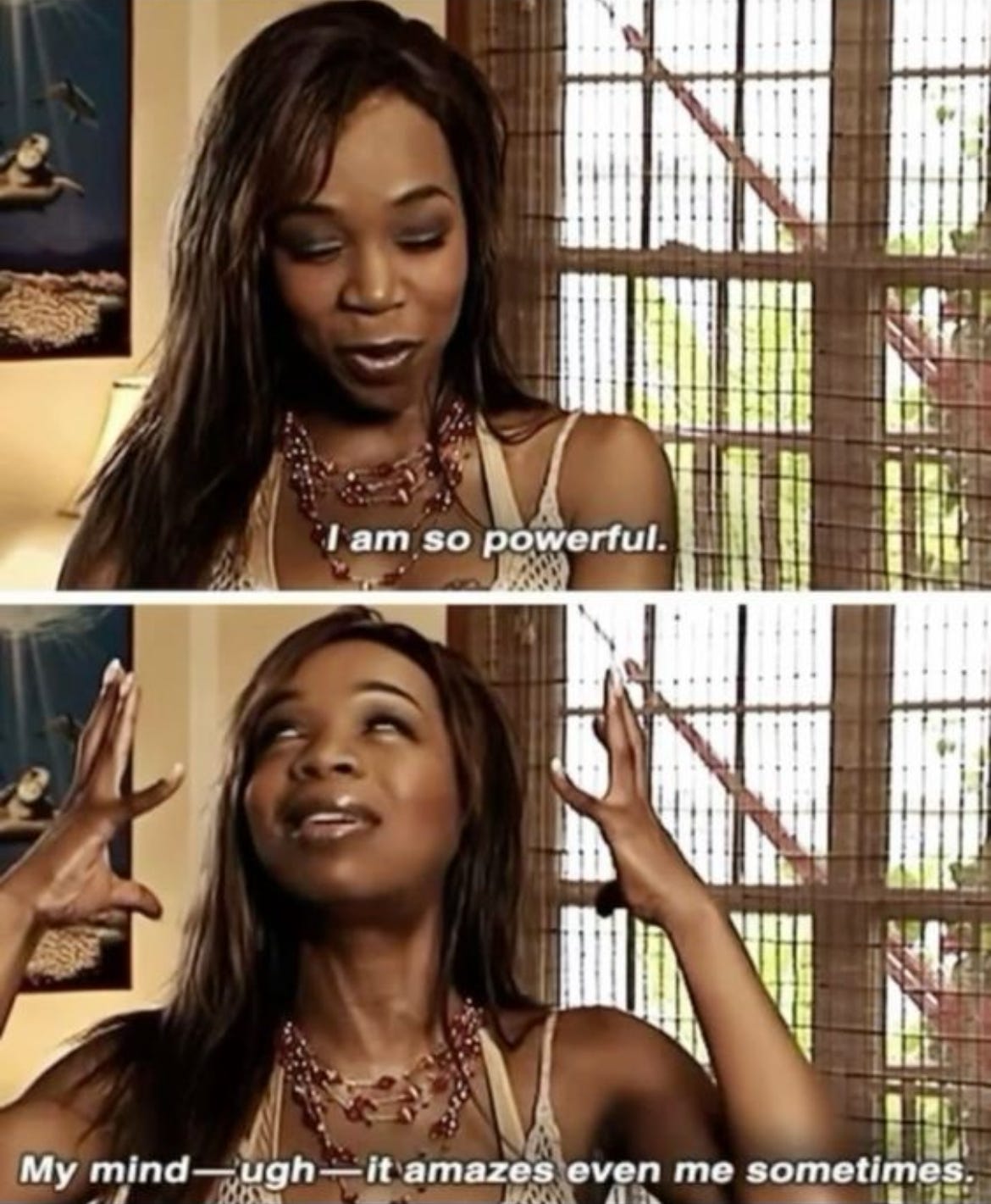
✼ Journal Prompts to Build a Relationship with Your Future Self
Find a quiet space and set aside. I recommend spending five to ten minutes on each exercise, no need to complete them all at once. Make yourself comfortable and allow yourself to sit with whatever comes up.
✦ Imagine yourself ten years from now. Write a letter from this future self to who you are now. Let you future self tell you what they are thankful for - the things you did, the things you gave up, and why they are proud of you.
✦ Paint a picture. You know your oldest and most familiar identities. This exercise encourages you to bring to life the person you want to be. (Beyoncé’s Sasha Fierce, anyone?)
List three thoughts/beliefs of this person (these also work as affirmations!) e.g. Sarah believes it’s important to look after herself.
List three small actions that align with these thoughts and beliefs. e.g. Sarah moves her body for 5 minutes every day.
What is something this version of yourself has let go of that your current self clings to? e.g. Sarah has let go of making excuses. Sarah has let go of ignoring her needs.
How does it feel after doing one of these actions? e.g. Sarah feels grateful, happy and proud of herself for seeing it through. (Tune into what is happening in your body when you speak these positive words into yourself - I felt a shift, even for this made up example! This feeling can anchor you as you prepare for the action, so before moving your body, for example, you are already aligned with the knowing that you’ll feel proud and grateful)
✦ Prepare yourself. Imagine the first time doing this thing. What does it feel like? Scary, impossible? Now imagine the tenth time, the one hundredth time. Scale the feeling.
![r/Poetry - [poem] I am running into a new year by Lucille Clifton](https://substackcdn.com/image/fetch/$s_!2_pv!,f_auto,q_auto:good,fl_progressive:steep/https%3A%2F%2Fsubstack-post-media.s3.amazonaws.com%2Fpublic%2Fimages%2F3c63b43d-67b3-4a48-bee1-12e2dadc6975_640x782.jpeg "r/Poetry - [poem] I am running into a new year by Lucille Clifton")
That’s all folks. Let me know your thoughts (it genuinely makes me so happy when you leave comments hehe). Leaving you with with this poem from Lucille Clifton & I’ll be in touch soon about the next workshop. Take care.

Love these journal prompts. Thank you Sarah x