

April Roundup
life's true metrics and taking the pressure off, Chimamanda's new novel, comforting reality TV and more...

Hi friends,
I hope April has been good to you.
In the sea of consumption that is the internet, I’ve been trying to be more intentional about what I’m taking in and how I’m remembering the good stuff. This roundup isn’t everything from April but a curation of the things that have been on my mind, most frustrated me, made me think, laugh and brought me joy. Read on for reflections on ambition, what it’s like to be a sociopath, relaxing reality TV and what is making so much literature, TV and film feel flat at the moment.
Let me know in the comments if you read/watch any of these and, if you’re in the UK, I hope you’re having a lovely Bank Holiday weekend :)
Sarah x

Reflection: Life’s true metrics & questions that ground me
“There’s always more time to work,” a wise friend said over lunch one Saturday. Though I had a peaceful ease into thirty, now a couple of years into this new decade, I’ve been frequently thinking about my decisions (past and upcoming), my future, my hopes and dreams versus what is necessary and reality. So much of my internal questioning has coalesced around work and has more deeply revealed my attachment to work as the vehicle that will lead me to “fulfil my potential”. I know this is a legacy of school and being someone that was academically able. While I always told myself that all I wanted to do was my best (my school motto was, in fact, ‘give your best’), I am continually coming up against my unhealthy views of ambition and achievement, that keeps me in an unhealthy loop thoughts and self-image.
I’ve internalised ‘doing my best’ as striving, achievement, recognition, status — and when these things aren’t present, I feel like I’m falling short and I then create pressure that leads me to feel even more inadequate. I take on the expectations I assume others have of me, I compare myself to my peers, I absorb ideas of what I “should” be doing at this age fed by social media and society at large. In imagining another kind of life, there’s always a temptation to imagine the best of that life — rarely do we see its shortcomings. And, in looking at our own lives, it’s too easy to look for what is lacking than all that is abundantly good. This pressure creates doubt and worry that leads me outside of myself, unable to see my life properly and all the good that happens on a day to day basis. Laughing first thing when I wake up. Time flying over drinks and dinner. Watching the sun rise and set. Being moved by music. Moving my body. Being cared for, supported and loved. Caring and loving others.
Of course there are things I aspire for, but my job is to detach these from the urgency of pressure and to uproot the feelings of not-enoughness. So often I deny myself of what I seek, or feel anxious and doubtful, because of pressure and feeling like things need to happen and be figured out now. Yet time and time and again, things have worked out. I’m learning to trust in this pattern. I tell myself, “I don’t know how, but I trust that it will happen”. Life is long and there is time, and my job is to tend to the seeds I’ve planted and trust that they will bloom exactly when they’re meant to.
Questions I’ve asked myself…
If I died tomorrow, would I be happy with the things I’m worry about?
The answer is usually no. This refocuses me real quick.
The writer and cultural anthropologist Mary Catherine Bateson describes living as an “improvisational art”.
Prompt: Take the canvas of my life. Stretch it over 30 to 40 years. What are all the things I imagine filling with that time? How much really needs to happen right now, in this moment?
Again, the answer is usually no. I see I have time, and remind myself that life has its seasons and it takes time to build. It also makes me feel more hopeful about the future - look at how much time I have to fill!
Make a mind-map of where pressure is coming from.
This exercise was so helpful in seeing all the ways I put pressure on myself. So little pressure was real - it came from my head, of things I think people expect of me, of comparing myself. When I notice myself feeling pressure now, I ask myself where it’s coming from and that helps to get me back on track.

Reading
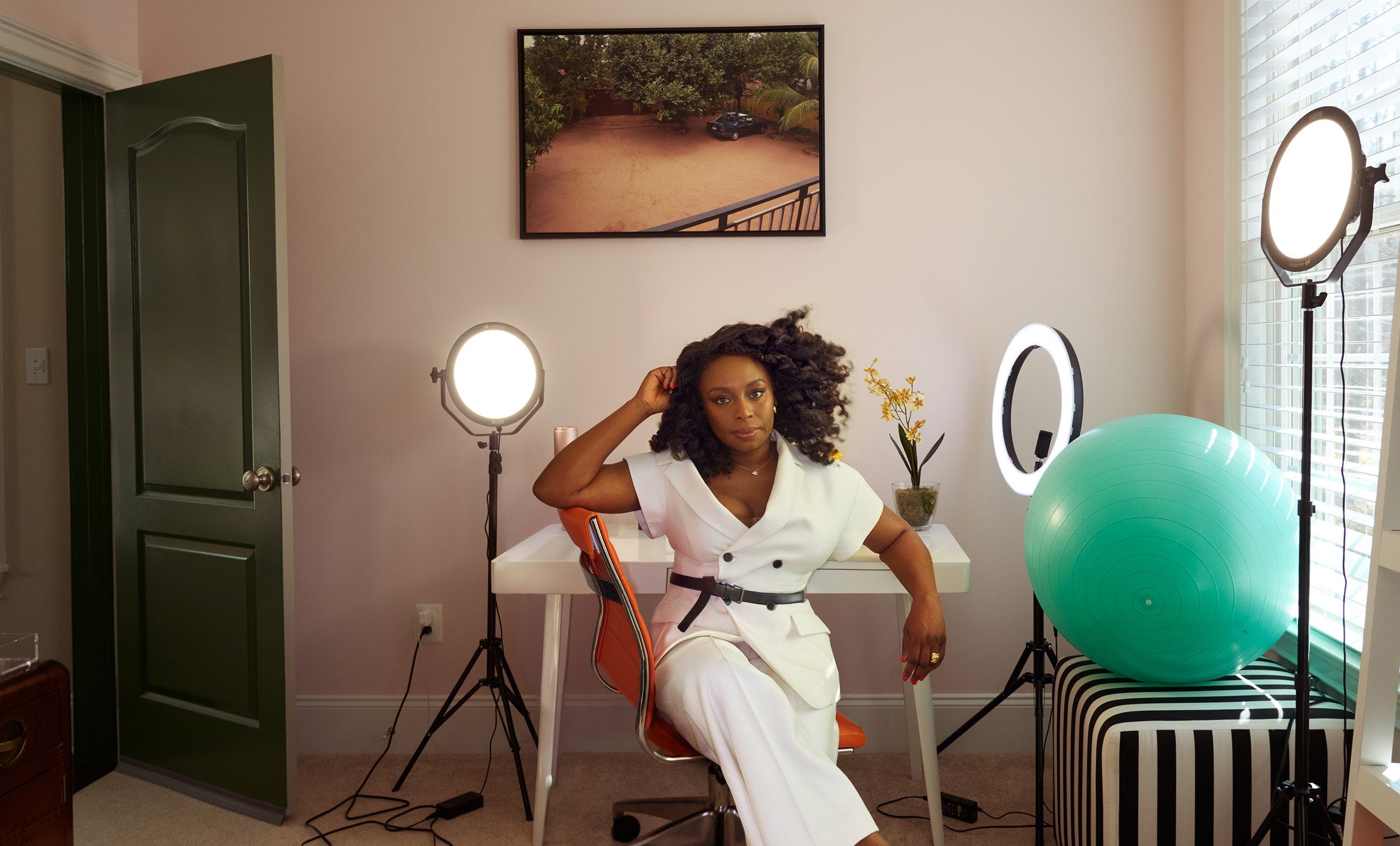
Dream Count - Chimamanda Ngozi Adichie
It was a book over ten years in the making. Dream Count, by Chimanada Ngozi Adichie, tells the story of four women: Chiamaka (a travel writer), Zikora (a laywer), Kadiatou (a maid) and Omelogor (a banker turned grad student studying pornography). Set against the background of the pandemic, the women reflect on their lives and loves, and the novel reads like four, loosely connected novellas and disappointing men is the common thread that ties them together.
I’ll be writing a full review but to cut to the chase, I struggled with Dream Count and think it is, by far, the weakest of Adchie’s novels. We never quite escape from Adiche’s own mind. The book reads as a mouthpiece, her widely known views on leftist/activist circles and a very 2010s kind of feminism (that reads in Dream Count as not far from ‘men are trash’) palpable on the page, as well as a repetitive portrayal of the immigrant experience in the States, that feels so close to Americanah. Personally, I feel Adchie is at her best grappling with historical, socio-political realities as seen in Purple Hibiscus (my personal favourite) and Half of A Yellow Sun. Please, give us Nsukka and Enugu, and leave the DMV alone.
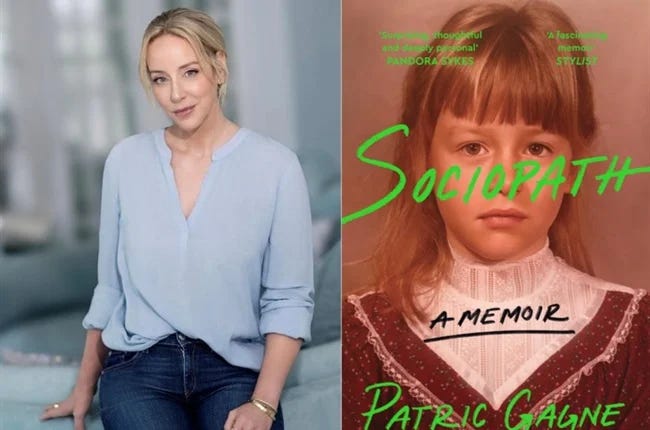
What It’s Like to Be a Sociopath (New York Times)
This was a fascinating interview with Patric Gagne, a writer, former therapist and sociopath. Sociopaths have bogeyman status in the public imagination, but reading the workings of Gagne’s mind doesn’t only give an insight into sociopathy, but left me thinking about morality and why any of us do what we do.
What does that redirecting look like in practice?
Every once in a while, I will have an urge to do something destructive just because I can, and my redirect is, Do you want this destructive behavior? Or do you want to continue to maintain this life that you have, which requires that you not do those things? I have to have that conversation with myself.
Are you able to describe how you’ve built a sense of morality?
Just because I don’t care about someone else’s pain, so to speak, doesn’t mean I want to cause more of it. I enjoy living in this society. I understand that there are rules. I choose to follow those rules because I understand the benefits of this world, this house where I get to live, this relationship I get to have. That is different from people who follow the rules because they have to, they should, they want to be a good person. None of those apply to me. I want to live in a world where things function properly. If I create messes, my life will become messy.


The New Literalism - Namwali Serpell / The Case Against the Trauma Plot - Parul Sehgal (The New Yorker)
We’ve all had the experience of reading or watching something and feeling like we’re being hit over the head or force fed a point or issue. It’s frustrating and takes away the thrill of art that leaves us with more questions than answers.
These features both have important points to make in their own right about the current state of particularly literature and film, but I’ve shared them together as Namwali Serpell and Parul Sehgal make similar comments on the contentification of art that has created to predictable, packagable, easily digestible and easily marketable forms. This art resists the murkiness of not knowing, of genuine ambiguity, and the sense that the artist is the working out a question rather presenting the audience with a neat conclusion. But have no fear, both authors offer recommendations of literature and film that will get you thinking in the way art is supposed to.
Some quotes…
The New Literalism
“The point is not to be lifelike or fact-based but familiar and formulaic—in a word, predictable. Artists and audiences sometimes defend this legibility as democratic, a way to reach everyone. It is, in fact, condescending. Forget the degradation of art into content. Content has been demoted to concept. And concept has become a banner ad.
Saying the quiet part out loud has given way to a general loudness. This is as true in our cultural life as it is in our political life, which feels like a badly written finale, so in your face are the Ponzi schemes, Nazi salutes, and tech-bro cant of our latest overlords. That sense of unmistakable catastrophe may be why we keep returning to predigested cultural comfort food.”
The Case Against the Trauma Plot
The trauma plot flattens, distorts, reduces character to symptom, and, in turn, instructs and insists upon its moral authority. The solace of its simplicity comes at no little cost. It disregards what we know and asks that we forget it, too—forget about the pleasures of not knowing, about the unscripted dimensions of suffering, about the odd angularities of personality…

Watching
Survival of the Thickest (Netflix)
Survival of the Thickest is an underrated gem — well written, big-hearted (so Jersey!), laugh out loud funny, moving and visually pleasing (the styling is impeccable)). I recently finished the second season and found myself rationing episodes because I didn’t want it to end. The show sees New Yorker Mavis Beaumont (played by the writer and comedian, Michelle Buteau), rebuilding her life following a break-up, with the help of her friends Marley and Khalil (played by Tasha Smith and Tone Bell). Expect oversized characters, drag queens, a bit of cheese and the messiness of figuring out life in your late 30s.
Race Across the World (BBC iPlayer)
A colleague suggested I’d like Race Across the World and how right she was. The series sees five pairs are tasked with racing across the world - the catch? No flights or phones are allowed. Series Five recently started, seeing the pairs make their way from the Great Wall of China and finishing at Kanyakumari, on the southern tip of India. The BBC releases episodes weekly (imagine that!) and so I’ve gone back and started watching from Series One.
It’s the kind of reality TV that relaxes instead of numbs your mind. I’ve found it inspiring, I’m learning new things about parts of the world (please tell me why I’ve been looking up flights to Uzbekistan?!) and, with the presence of so many older competitors, it’s an important reminder that it’s never too late to realise your dreams.
Subway Takes with Kareem Rahma (Youtube)
I might be late to the party but Subway Takes with Kareem Rahma is one of my favourite things on the internet right now. The hot takes may be wild but they’re so often true, if you’ll let yourself admit it. It’s got me thinking what my take would be should Kareem ever stop me on the Tube… Enjoy some of my favourites below and this Guardian interview with Kareem about his plan get famous.