

July in Constellations
the most interesting things I've read, watched and listened to this month

Hi friends,
I hope you’re all well. I don’t know about you, July flew by (as is this whole year 😭). There’s something about moving into the second half of the year that awakens my senses to the impending loss. I love autumn but I’ve been relishing the bright mornings and long nights, the relief of rain as our bodies have gasped for thirst, in good company sitting by the Thames, under soft light, talking until it’s closing time.
Until then, I’m making the most of summer and I’m back with another roundup of things that have stirred me this month. Read on for:
thoughts on stupidity as the beginning of discovery
a refreshing conversation on artificial intelligence with a Silicon Valley insider
a thought-provoking article on whether has boundary-talk gone too far
how the Arabic language is special
a quietly postcolonial film about a girl and her nanny
thinking of humans as listening animals?
& a beautiful poem from the late Andrea Gibson
✻ sometimes you need to feel stupid ✻
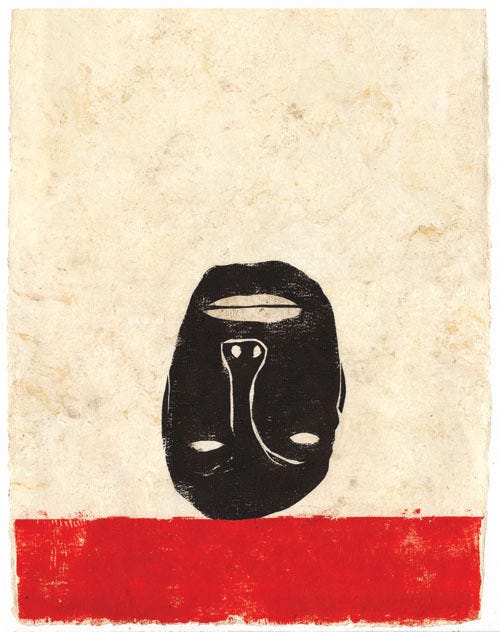
“Science makes me feel stupid too. It’s just that I’ve gotten used to it. So used to it, in fact, that I actively seek out new opportunities to feel stupid,” writes Martin A. Schwartz in the paper The importance of stupidity in scientific research in the Journal of Cell Sciences. Despite the slightly misleading title, Schwartz is making the case for the importance of feeling stupid, and stupidity, that first feeling of ignorance, as being a great compass directing us towards a path of exploring what we need or would like to know more about. Not just for scientists, I think this applies to so many facets of life — learning a new skill or language, travelling to a new country, meeting someone who is very different to you. What knowledge is to expertise, the feeling of stupidity is to curiosity.
The crucial lesson was that the scope of things I didn’t know wasn’t merely vast; it was, for all practical purposes, infinite. That realisation, instead of being discouraging, was liberating. If our ignorance is infinite, the only possible course of action is to muddle through as best we can.
The more comfortable we become with being stupid, the deeper we will wade into the unknown and the more likely we are to make big discoveries.
✻ a refreshing conversation about AI ✻
I find it difficult to see the wood from the trees in much of the conversation about AI. If headlines are to go by it is the best or worst possible thing to happen for the future of humanity. Karen Hao, MIT graduate turned journalist, offers a grounded and clarifying insights into what artificial intelligence actually is (along with its cousins deep and machine learning), the environmental cost it is already inflicting and the quasi-religious psychodrama of tech exes that has propelled us into this era.
I keep coming back to what Karen says here…
There are people who genuinely, fervently believe, and they talk about it as a belief, in this idea that we can fundamentally recreate human intelligence and that if we can do that there is no other more important thing in the world.
But, why? Why put all this investment, energy, at such cost socially, environmentally etc, when we have humans! I’d like to do some more digging into the philosophies of the men behind the AI show but my initial thoughts are that this is simply the next phase in a long history of extraction, greed, and colonisation where nothing is sacred or deemed beyond human hands.
✻ we need language better than “boundaries” ✻
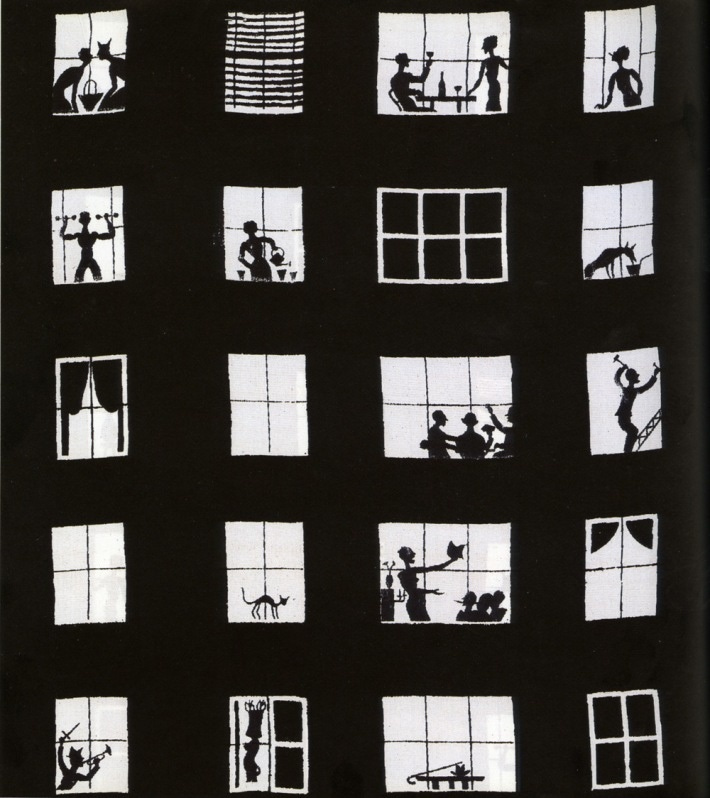
Boundary Issue by Lily Scherlis in Parapraxis is the best thing I read this month. Since reading it, I can’t help but notice how much the language of boundaries slips into my own language, in others both personally and professionally.
I sometimes flinch when boundaries are invoked. They appear as some kind of magic solution — if only you/I/they had better boundaries, then maybe X/Y wouldn’t have happened. It holds some partial truth but this language makes it too easy to forget that it is the nature of relationships, whether between people or nations — that either party is able to do whatever it is willing to, regardless of whatever “boundaries” have been put in place.
Lily Scherlis takes a psychoanalytic approach in looking at the history of boundaries — how they emerged, and took hold of how we think about and structure relationships. Quoting from Freud, Scherlis says
“the divisions between self and other are not “sharp frontiers like the artificial ones drawn in political geography.” He goes on: “We cannot do justice to the characteristics of the mind by linear outlines like those in a drawing or in primitive painting, but rather by areas of colour melting into one another as they are presented by modern artists.”
It’s inspired me to think about the language I’m using and find more edifying ways to say what I mean when I talk about “boundaries”
✻ a very cool video about the Arabic language ✻
✻ a child’s perspective in film ✻
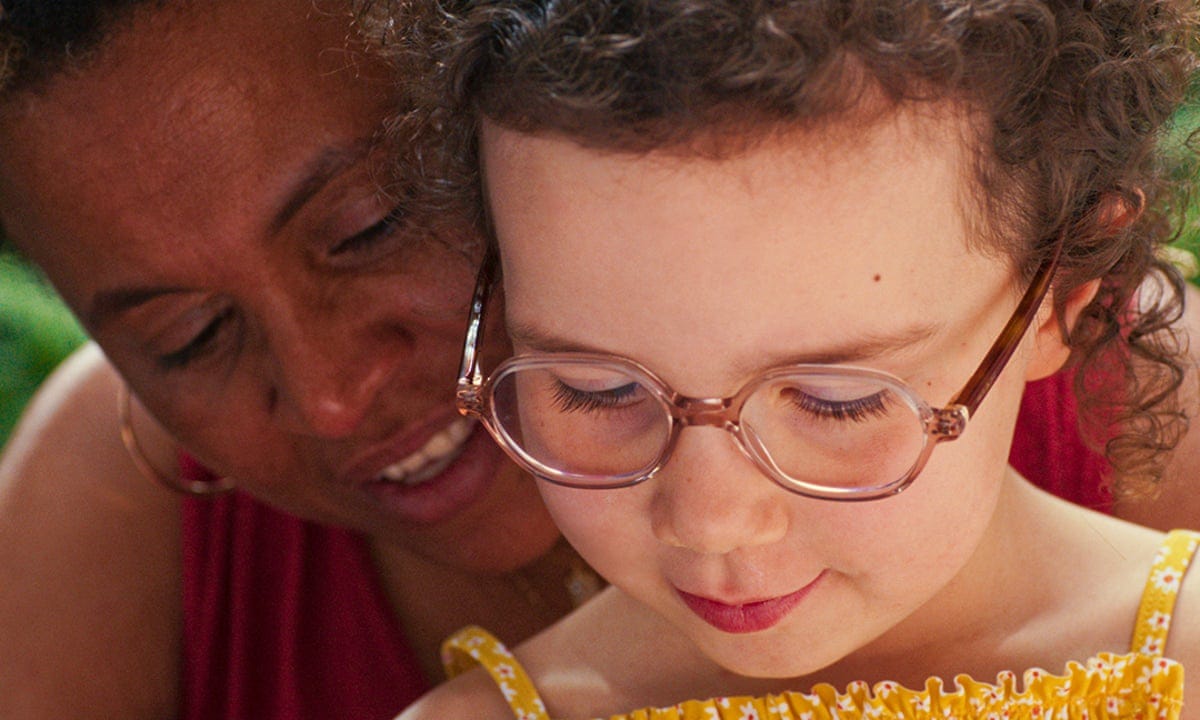
I finally got round to watching Àma Gloria (2023). French-Georgian director Marie Amachoukeli offers a tender and nuanced portrait of childhood shaped by histories of colonialism and class, grief and need. Six year old Clèo has known no other mother apart from Gloria, her nanny from Cape Verde. When Gloria receives a call that requires her to return home, she sends for Clèo to spend one final summer together. As the film unfolds, we see the tectonic plates of Clèo’s childhood begin to move underneath her feet as she comes to realise that she isn’t the sole object of Gloria’s world.
Amachoukeli does something gently subversive in this film. Through the selection of camera lens and shots, we, the viewer are “so close to Clèo that you have to become her yourself: you feel like her, you eat like her, you love like her.” Doing so splits open the most obvious narrative of the film — black African nanny looks after white French child — and all that we think of in that dynamic: the extractive relationship between the global South and North, the politics of care, race. The film becomes a more nuanced tale of a girl and her caregiver who genuinely love one another, a taboo relationship that is informed but not overdetermined by the politics. Both Clèo and Gloria come face to face with what they have lost and will lose, and how they must continue with life apart from the other.
If what I’ve said hasn’t convinced you to watch it, tune in for Louise Mauroy-Panzani’s exceptional performance as Clèo that will have you laughing, smiling and crying.
Honourable mentions goes to Scrapper (2023) about Georgie, a streetwise 12 year old fending for herself, who must confront a new reality when her estranged dad turns up out of nowhere, and Nanny (2022), a psychological horror that follows Aisha, a Senegalese immigrant, hired to care for the daughter of an affluent white family in New York.
✻ humans as listening animals ✻
“What if we thought of ourselves as ‘listening’ animals, equipped and adapted to receive language, rather than as animals that talk? Would we talk about listening more precisely? Would we want to?”
These are questions Faith Lawrence explores in her essay, The Listening Gift. “Listening,” she writes, “is the dark matter of conversation”. Drawing on the poet Rilke, who positioned himself as a “receiver,” Lawrence invites us to think about what becomes possible when we ask ourselves to open our ears instead of finding our voice. So much of what is important and beautiful in the world isn’t found or reducible to language — it’s found in the listening.
For gazing, you see, has its limits.
And the more gazed-upon world
wants to prosper in love.Work of the eyes is done,
begin heart-work now
on those images in you, those captive ones;
for you conquered them: but you still don’t know them.Rilke, Turning Point
That’s all for this month folks! I leave you with a reading of Tincture, a beautiful and devastating poem by Andrea Gibson, who passed away earlier this month. I wasn’t familiar with Andrea’s work while they were alive, but it has been a joy to discover her work.
Until next time,
Sarah