

Perfection, or, that which is completely done
On being your own authority of enoughness

I visit 575 Wandsworth Road on a grey Friday. From the outside, it is nothing more or less than a three-storey terraced house on a busy London road — unassuming and barely worth a second look, that’s if you notice it at all. This, I realise, is the first of its charms: its cunning deception to be less than you think it is.
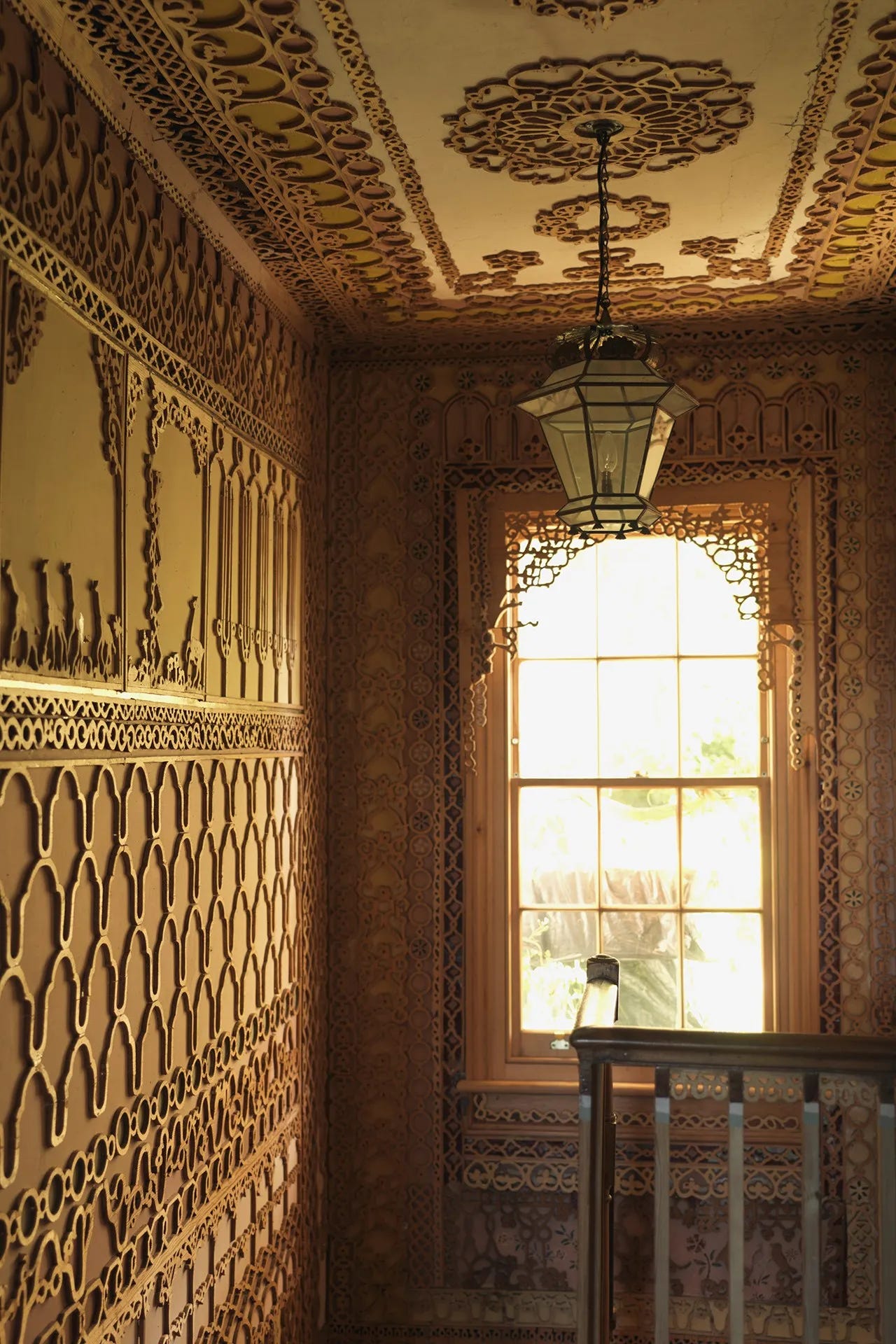
575 Wandsworth Road is the home of world of Khadambi Asalache (1935-2006), a Kenyan poet, novelist, architect and civil servant, who bought 575 Wandsworth Road in 1981 in a state of disrepair and spent the next twenty years making his home a reflection of his life.
A web of fretwork covers the walls and ceilings. I’ve never seen anything like it. Made from pine and intricate as lace, Asalache spent hours hand carving wood he found from skips into decoration for his home. As we walk through the house, his skill and style develops, moving from simple to more complex patterns, to people and motifs — ballet dancers twirl along the walls, lovebirds lean in to kiss. Our tour guide tells us that Asalache didn’t return to rooms once he had finished decorating and there’s no evidence of design plans, yet the fretwork flows freely, the walls feel like one continuous canvas.
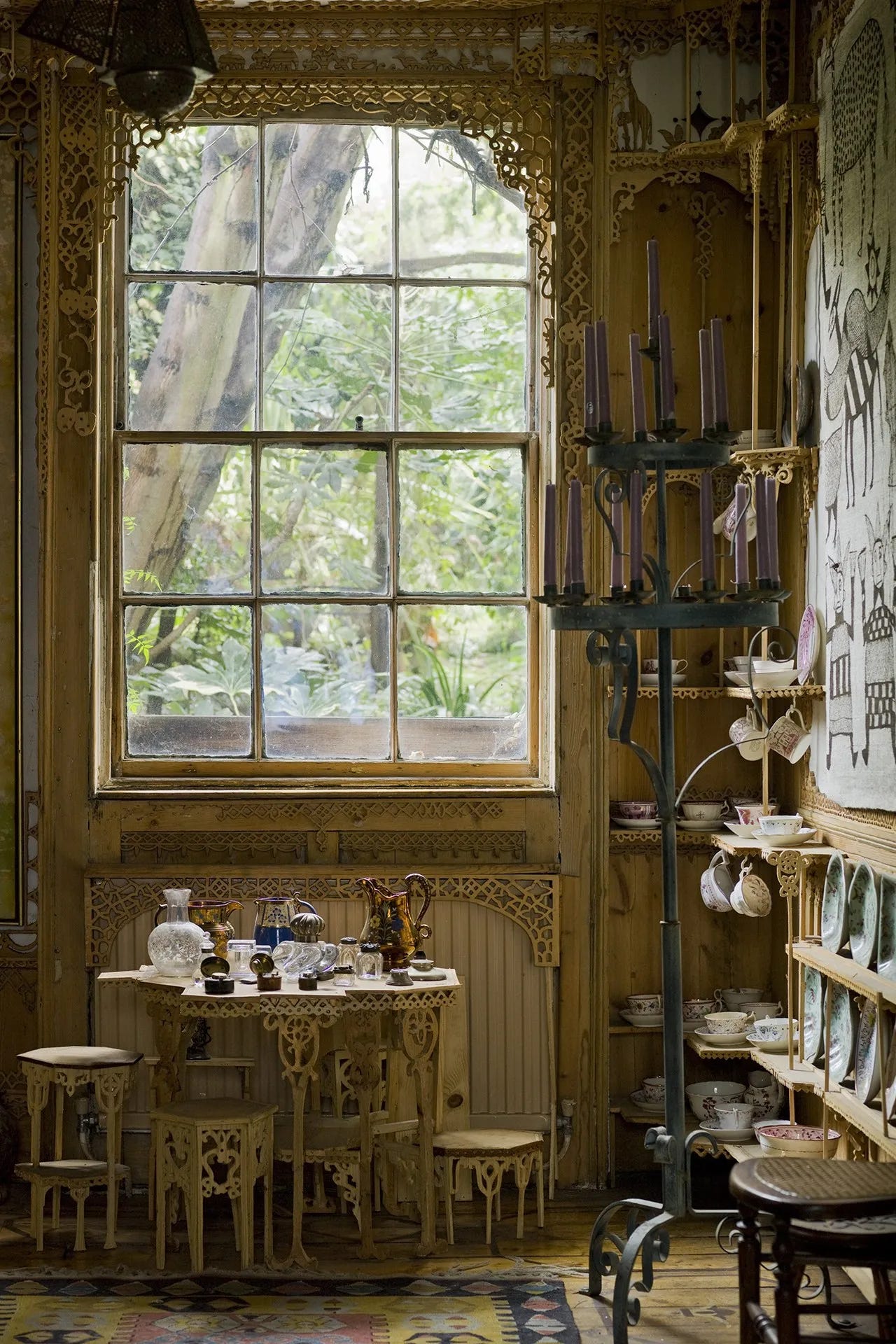
Life pours from every corner. Eighty thousand objects fill the two-up two-down: English lustreware, plates, books, postcards, wall hangings, records, tea cups, glasses. Asalache painted vignettes of his travels on the walls and returned again and again to personal motifs — lovebirds, ballet, hearts and birds. Dustings of gold paint shimmer from the touch of light streaming in a long passage through north and south facing windows. The garden emerges from the house like another room; sage green and accents of fuschia in nature appear in paints and rugs. The lines between inside and outside are smudged. While the house envelops like a nest, it opens out to its own world. 575 exists entirely according to its own measure.
As we walk around the house, our tour guide points out all the places Khadambi left untouched. The floorboards underneath a rug, pencil marks on the ceiling. She points out the crudeness of his fretwork — jagged edges and abrupt ends, the flagging nails and blu-tac keeping the fretwork in place. She points to all the imperfections.
But why didn’t he finish it, one of the visitors asks?
The tour guide suggests that Khadambi didn’t bother with decorating anywhere he couldn’t see.
In doing so, she places Khadambi’s sense of value on what could be seen.
In doing so, they miss the point: he was done because he said so.
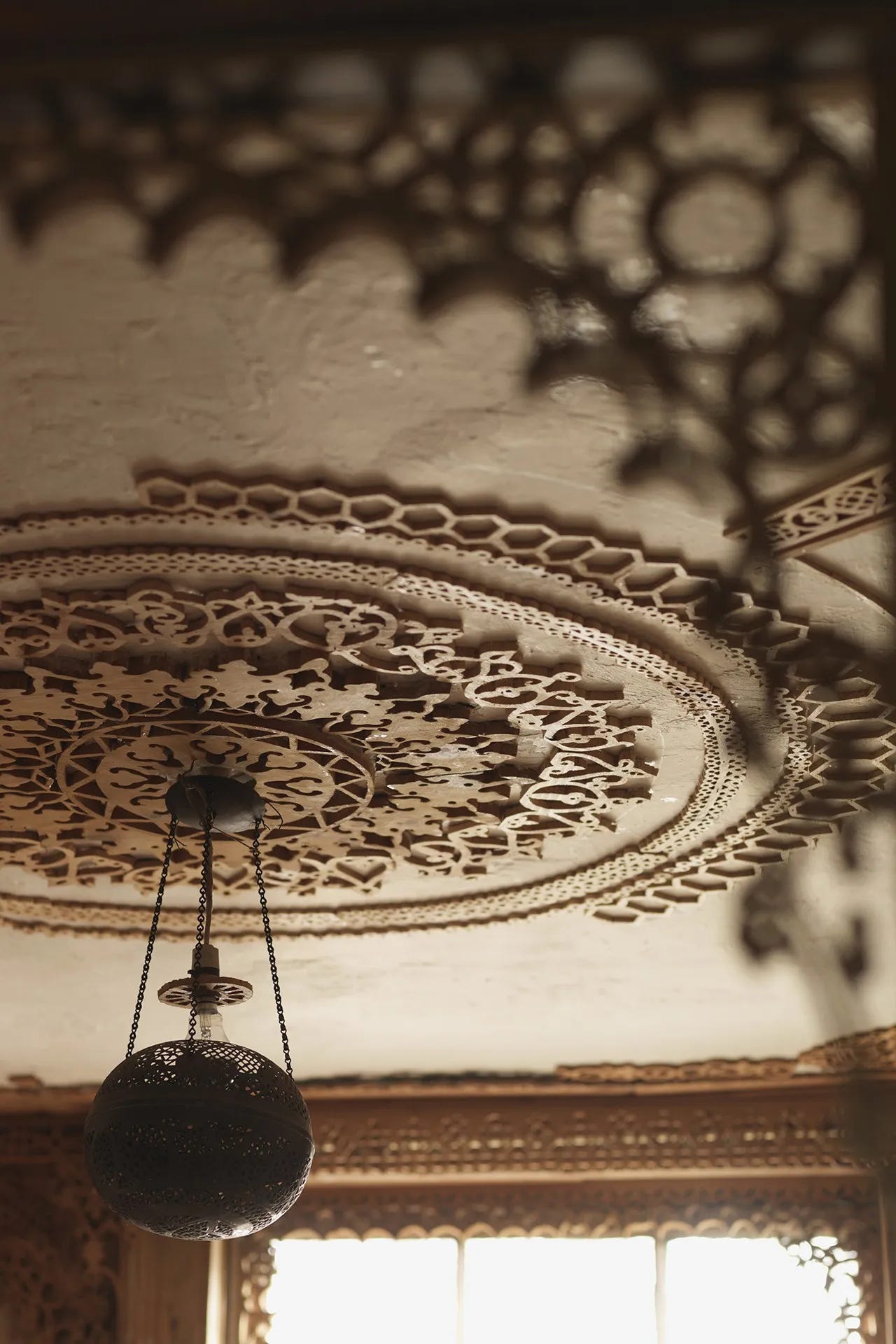
That Khadambi Asalache could be “done” in the presence of all these imperfections challenges Western notions of completion and perfection — the idea there must be such a thing as a beginning, middle and end, and these stages must be clearly read or translated to others. It is the inciting incident, rising action and resolution in storytelling. The song structure of verse-chorus-verse-chorus-bridge-final chorus. Nothing in nature exists like this.
The root of the word perfection comes from the Latin perficere. Per, meaning complete, and ficere, meaning to do. Only in the 13th century did perfection become attached to notions of excellence, and later flawlessness, correctness and purity.
What, then, does it mean for something to be perfect? // That which is completely done.
And how do I know if something is done? // Because I said so.
Because I said so. How does it feel to say those words? To be your own authority of enoughness.
Maybe we have always been in a state of perfection and it is the outside gaze, insidious and found across our culture, that judges who we are and our creations into thinking we are less than. It is the prizes and awards, the longlists and the shortlists. The market wants what it wants, and wants us to want it too.
But what if we/our art is already perfect? What if we are already complete?
The need for a beginning, middle and end is a limitation, not only of how we talk and think about creation, but a prison of our own lives. How often are we impatient to arrive, stuck in an unending middle, heavy with waiting? What if our lives are merely a series of comings and goings, of ebbs and flows. After all, where does breeze start or the crest of a wave end? The breeze flows, and waves rise and fall, unbroken, complete and perfect.
Remember Nikki Giovanni’s advice to writers:
“…you are your first reader. The first person that has to be impressed with what you’re writing is you. You always have to remember that.”
575 Wandsworth Road is now looked after by the National Trust but Khadami Asalache never intended for his home to be open to the public. Nearing his death, it was his friends who urged him to safeguard his creation from the greed of builders and new owners. But for twenty years, devotion led his artistic impulse. He created purely for his own pleasure and joy. We need not rush into making or sharing work. We can sit with it as Khadambi did, taking our time, governed by ourselves, ready to release to the world at the right time.
I left 575 Wandsworth Road with so many questions: how can I open myself to ebbs and flows? How can I love what I make? How can I awaken that deep sense of knowing that is all feeling and no words? How can I look at what I have made, which really is to look at a part of myself and say, yes, this is enough?
Thank you, as ever, for reading.